
In this article 5 sections
Since the news of the Coldcard exploit is slowly fading from the collective memory of the Bitcoin community, I thought it was a good time to look into the narrative data.
Looking through, I found five assumptions about Bitcoin security that the Coldcard exploited revealed were false.
This is quantifiable data about the collective consciousness of industry participants response to a shocking incident, so I hope you enjoy the findings.
-Fernando
1. That open source means somebody is looking
Coldcard's code has been public the whole time. Anyone could read it. The flaw sat in there for years and nobody found it. The claim is an AI cracked it in minutes.
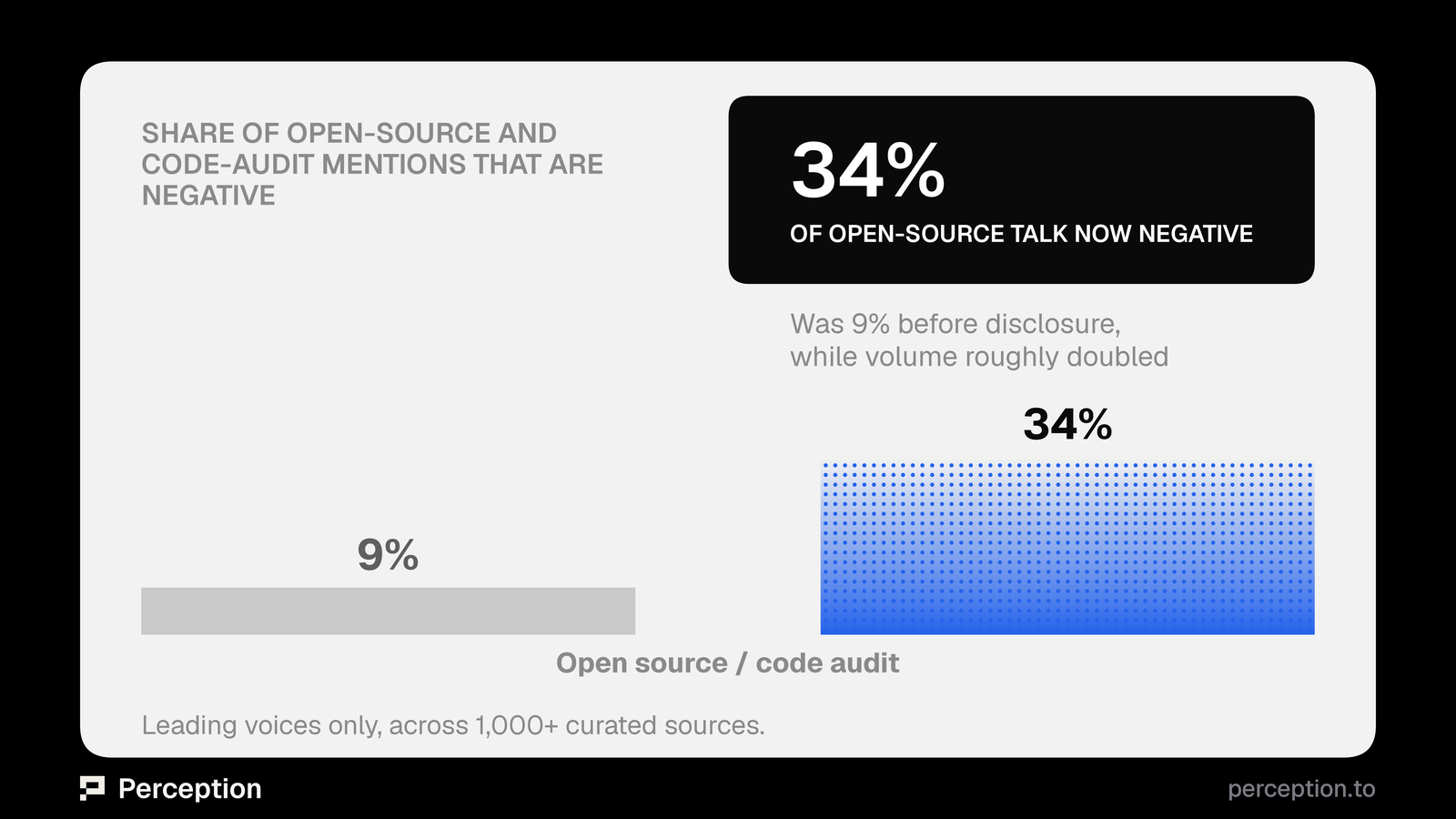
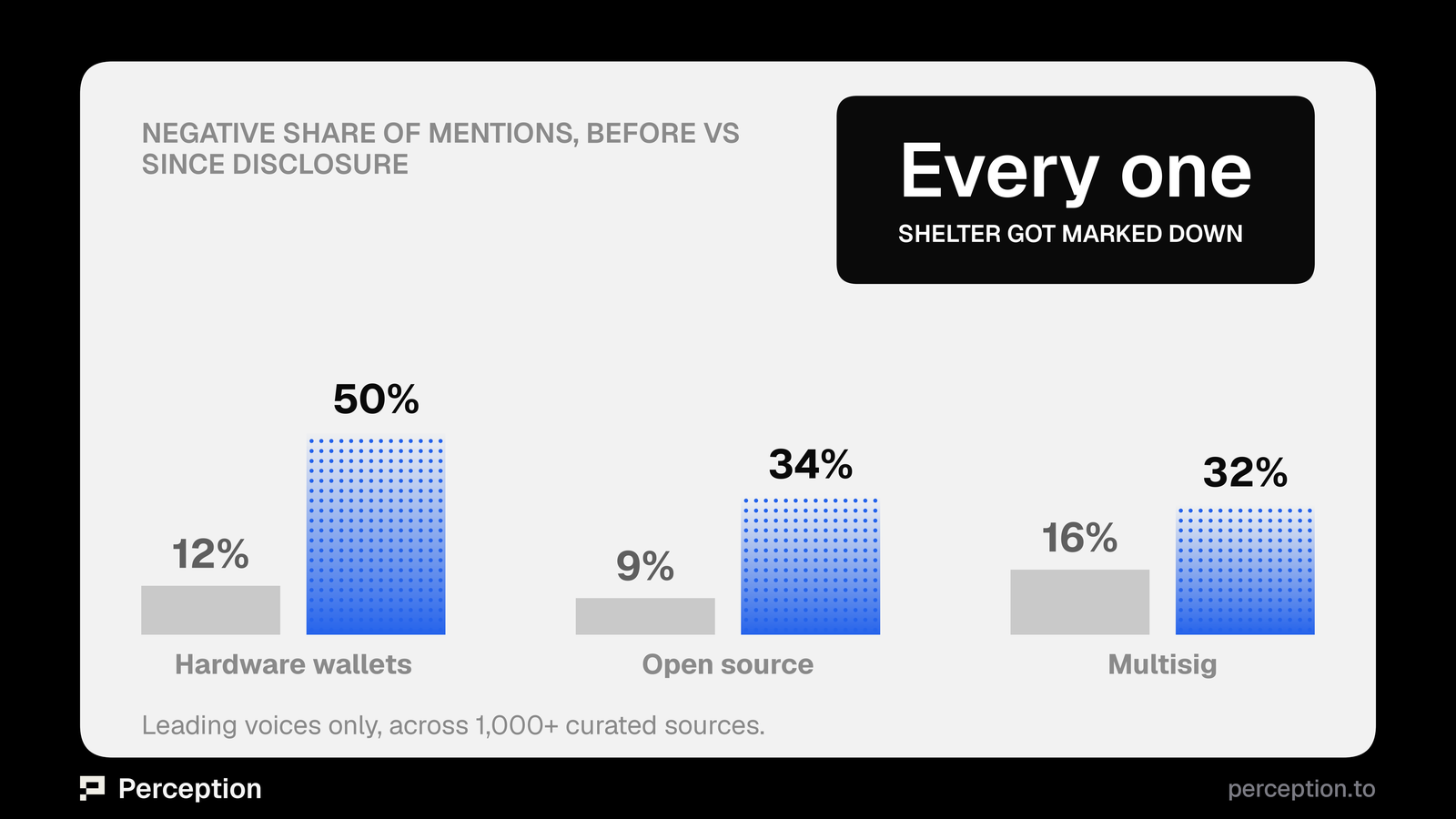
Before the exploit, open-source and code-audit talk ran 9% negative among the leading voices.
Since, 34%.
Volume doubled and confidence collapsed.
The safety guarantee this industry quotes more than any other got repriced in nine days.
2. That the fix was more technical setup
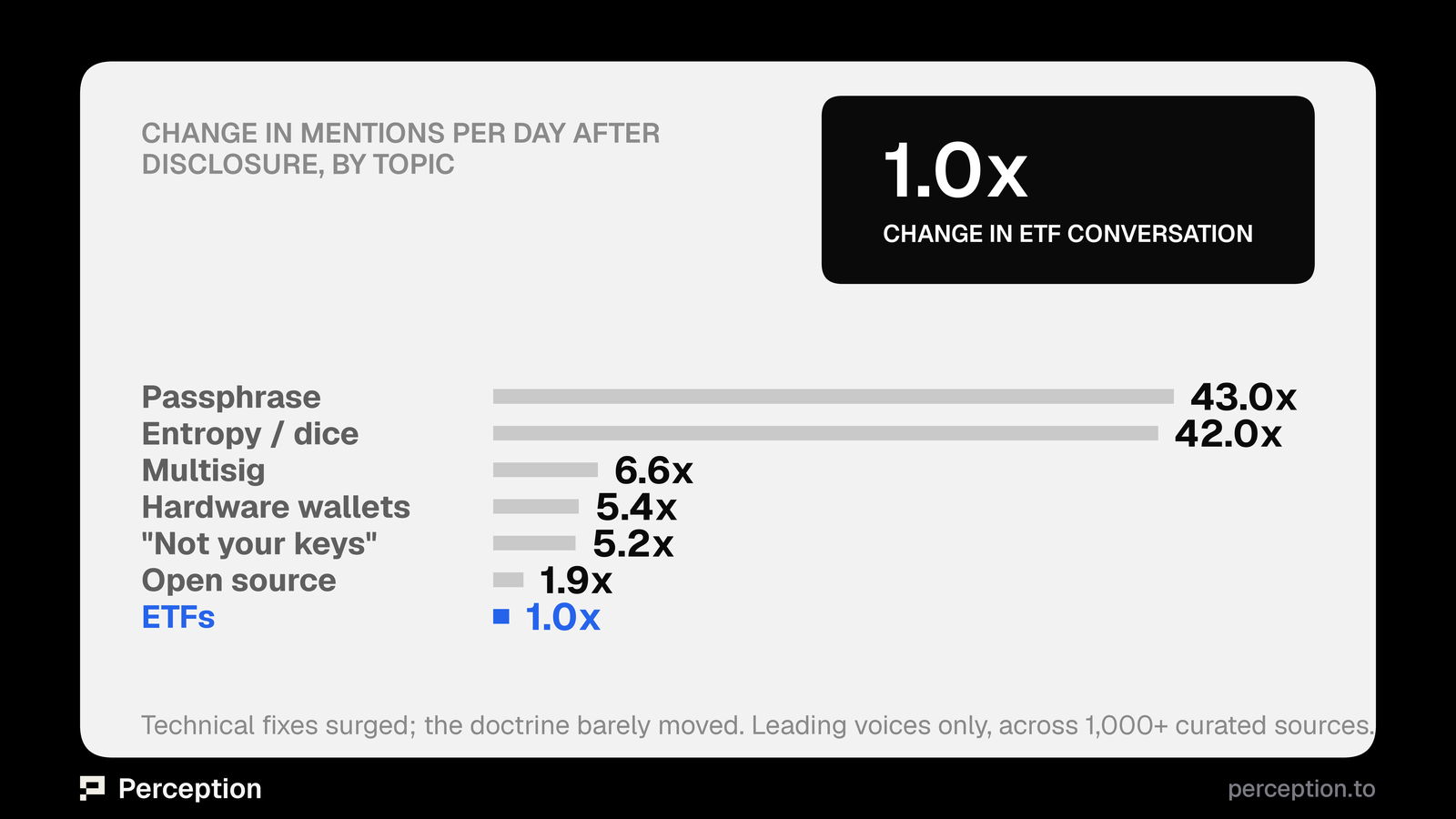
The panic went into entropy discourse.
Entropy talk went from about 3 mentions a day to 130. Passphrase talk went from under 1 a day to 33. Multisig went 7 to 48.
None of it made anyone feel better.
Multisig negativity doubled, 16% to 32%. Every hiding place got marked down while people ran into it. Hardware wallet and cold storage talk went from 12% negative to 50%.
The industry answered a crisis of trust by - checks notes - tinkering with dice, and the tinkering made people feel worse.
3. That “not your keys, not your coins” still governs
This is the one worth rereading.
ETF mentions in Bitcoin discourse didn't rise after Coldcard.
Volume stayed flat, around 110 a day before and after.
What changed was the feeling. ETF positivity went from 33% to 50%.
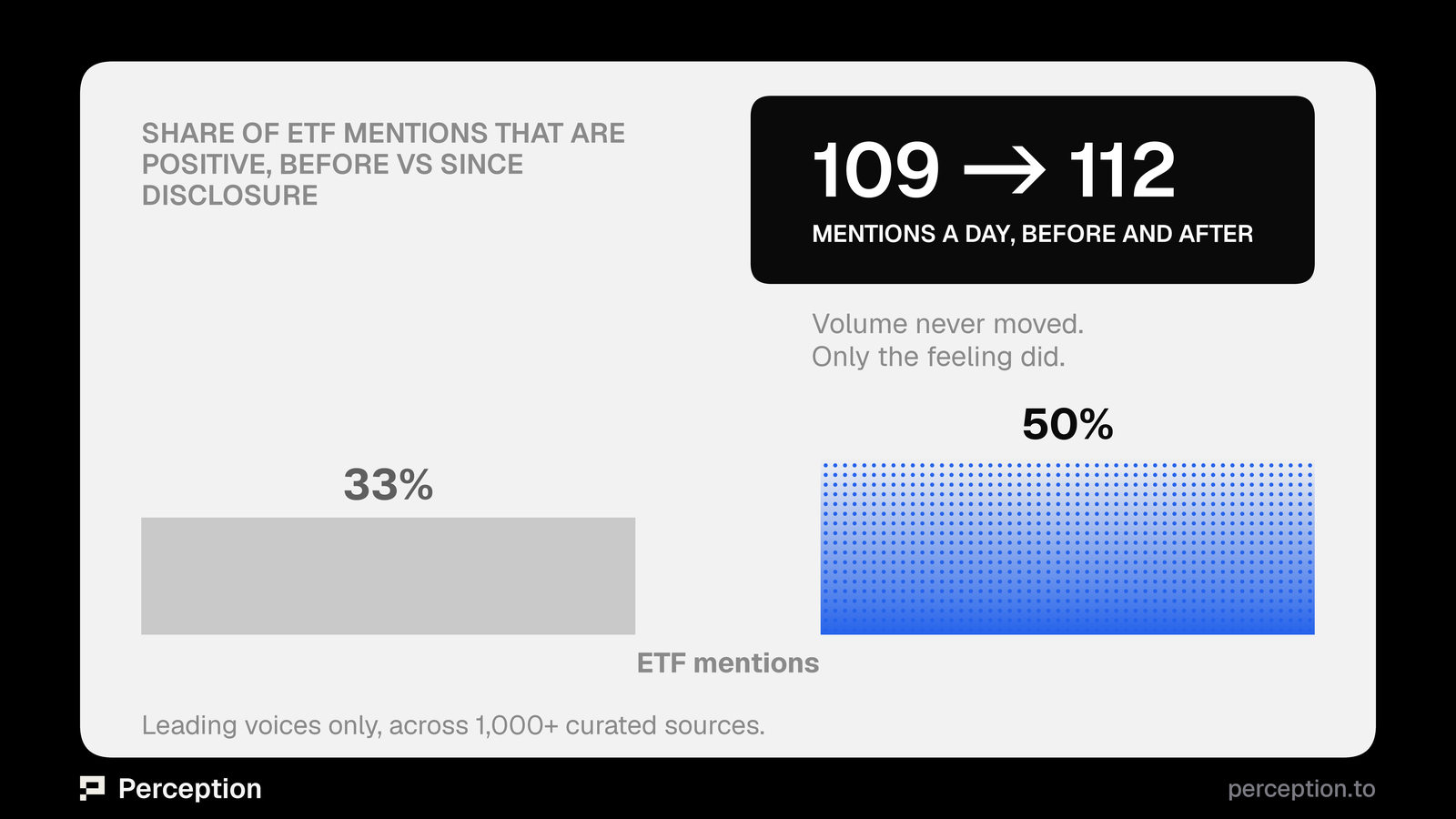
The dislike of the custodial product stopped, at the same volume, while $1B went in and 80% of it went to BlackRock.
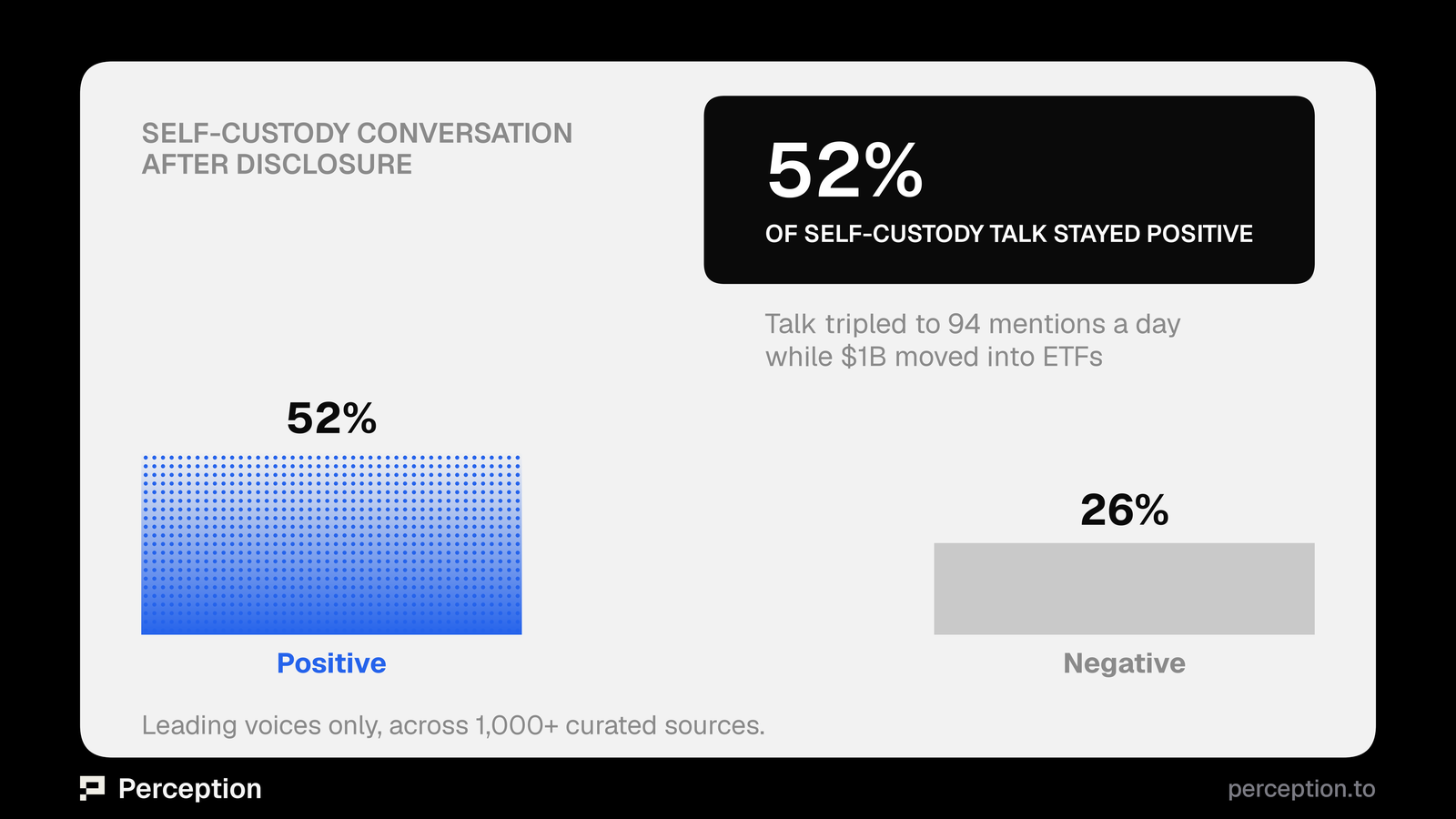
Self-custody talk tripled to 94 mentions a day and stayed net positive, 52% to 26%.
4. That the sidelined wallets would win
The story was rotation.
Coldcard falls, the honest alternatives rise. Right?
Zach Herbert pointed out that NVK had been suppressing them for years, and he was right.
Right?
They still lost.
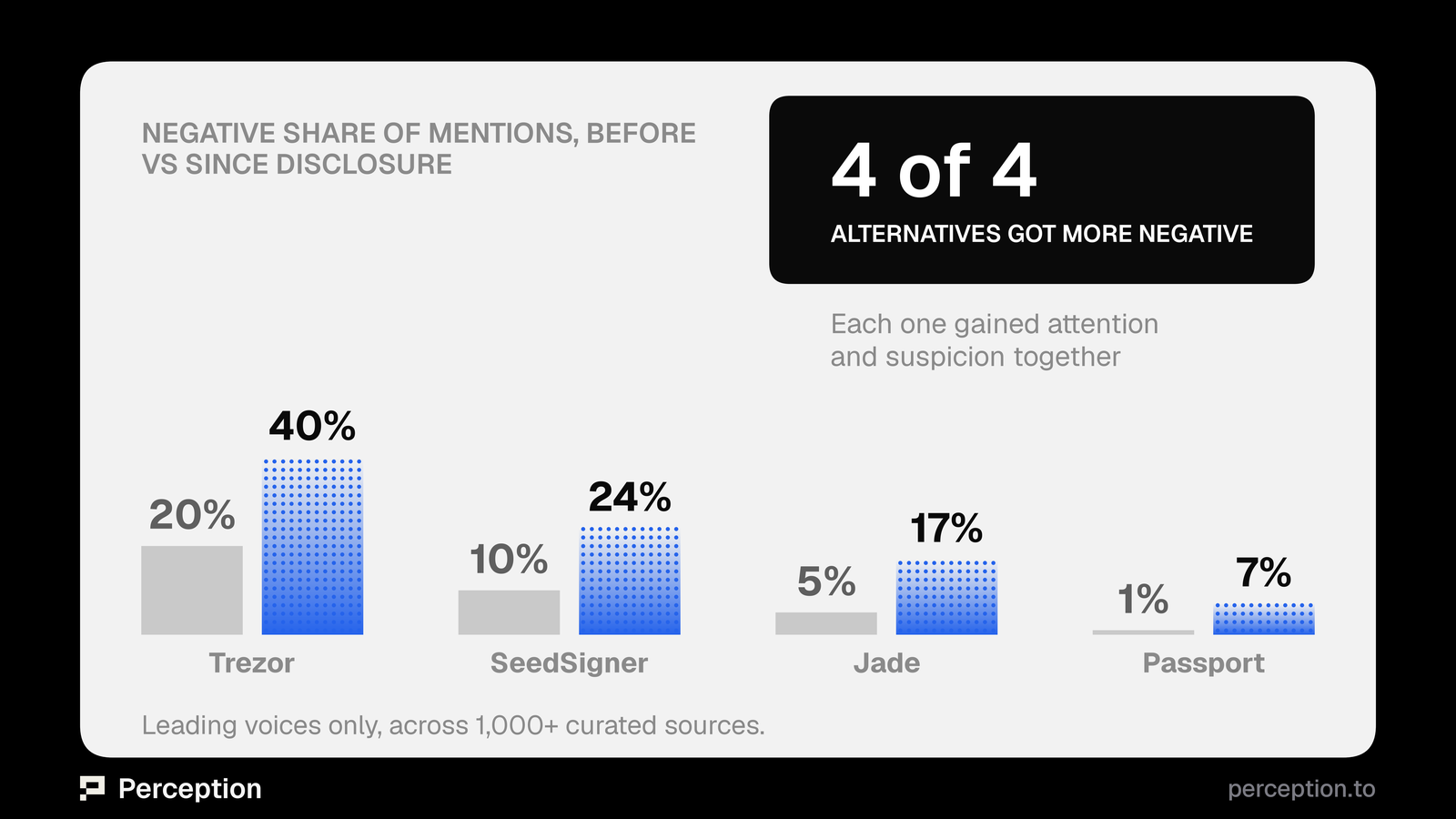
Trezor negativity went 20% to 40%. SeedSigner 10% to 24%. Jade 5% to 17%. Passport 1% to 7%.
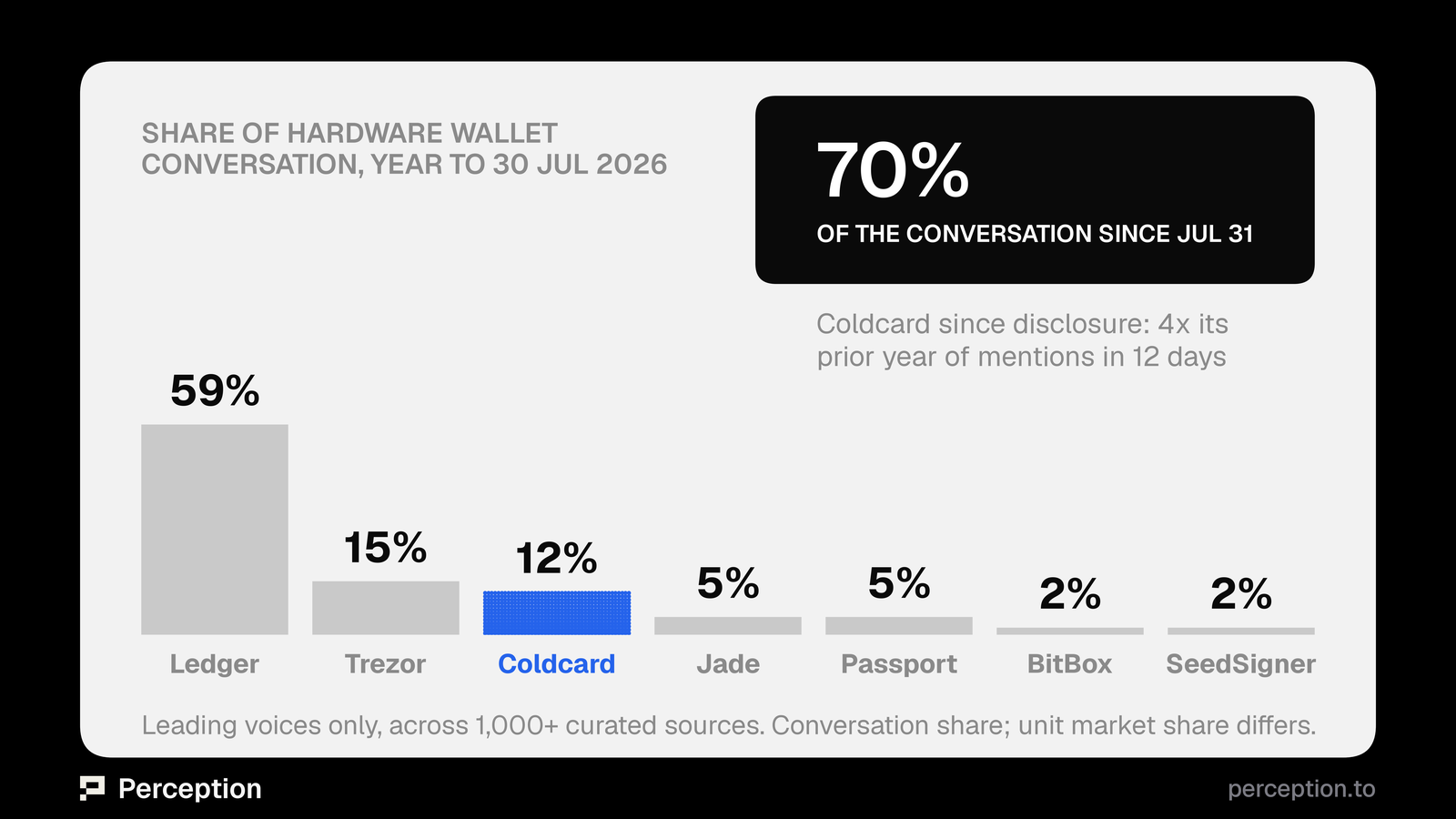
Every alternative got more attention and more suspicion in the same breath.
5. That the community catches things early
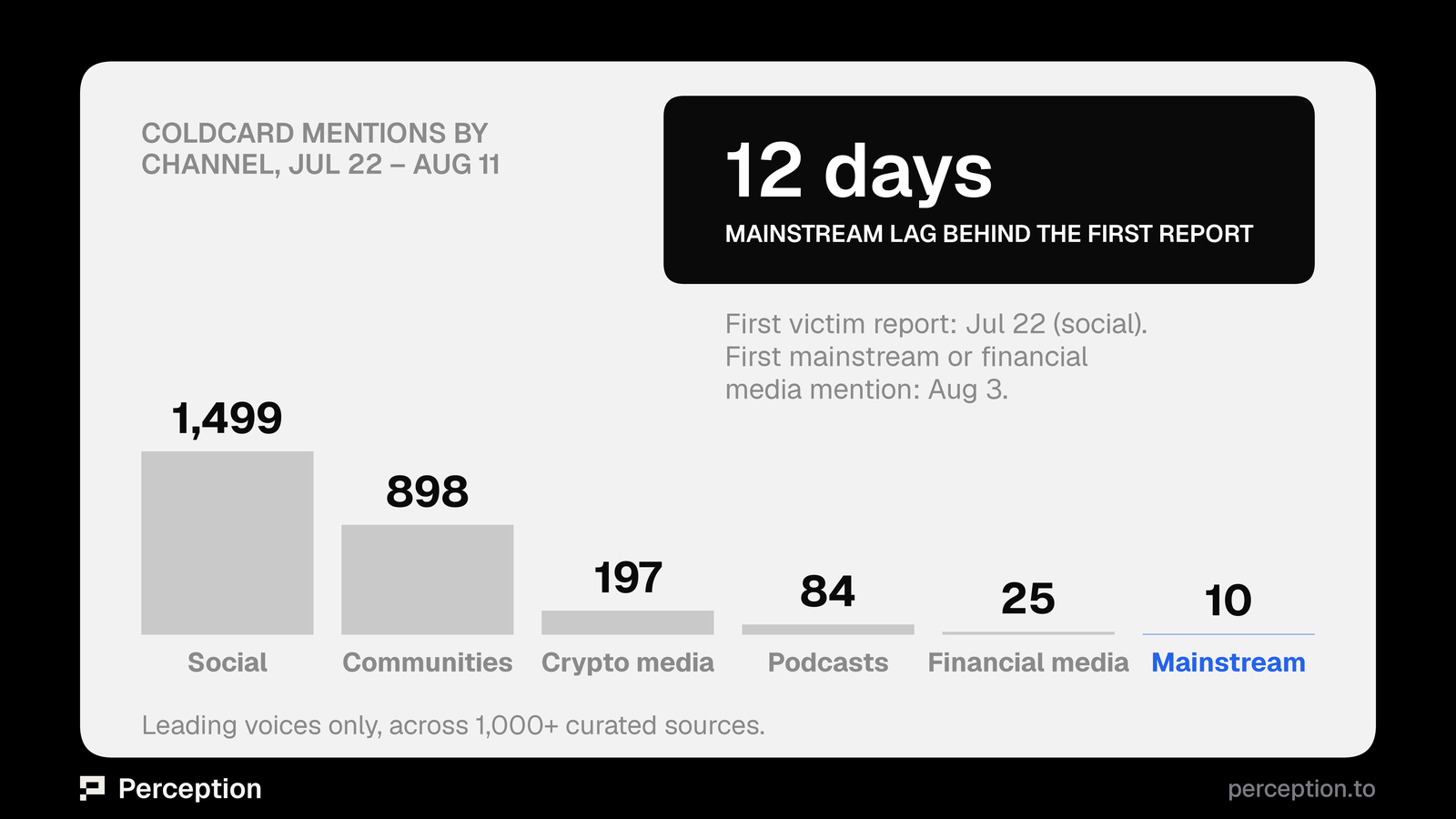
On July 22 a Coldcard owner posted "Stolen Bitcoin from Coldcard Q".
Nine days before exploit, six Coldcard mentions that day against a baseline of seven.
Nobody acted on it. Then somebody deleted it. The Reddit thread's gone.
What survives on our side is the index entry: title, timestamp, and a URL that points at nothing now.
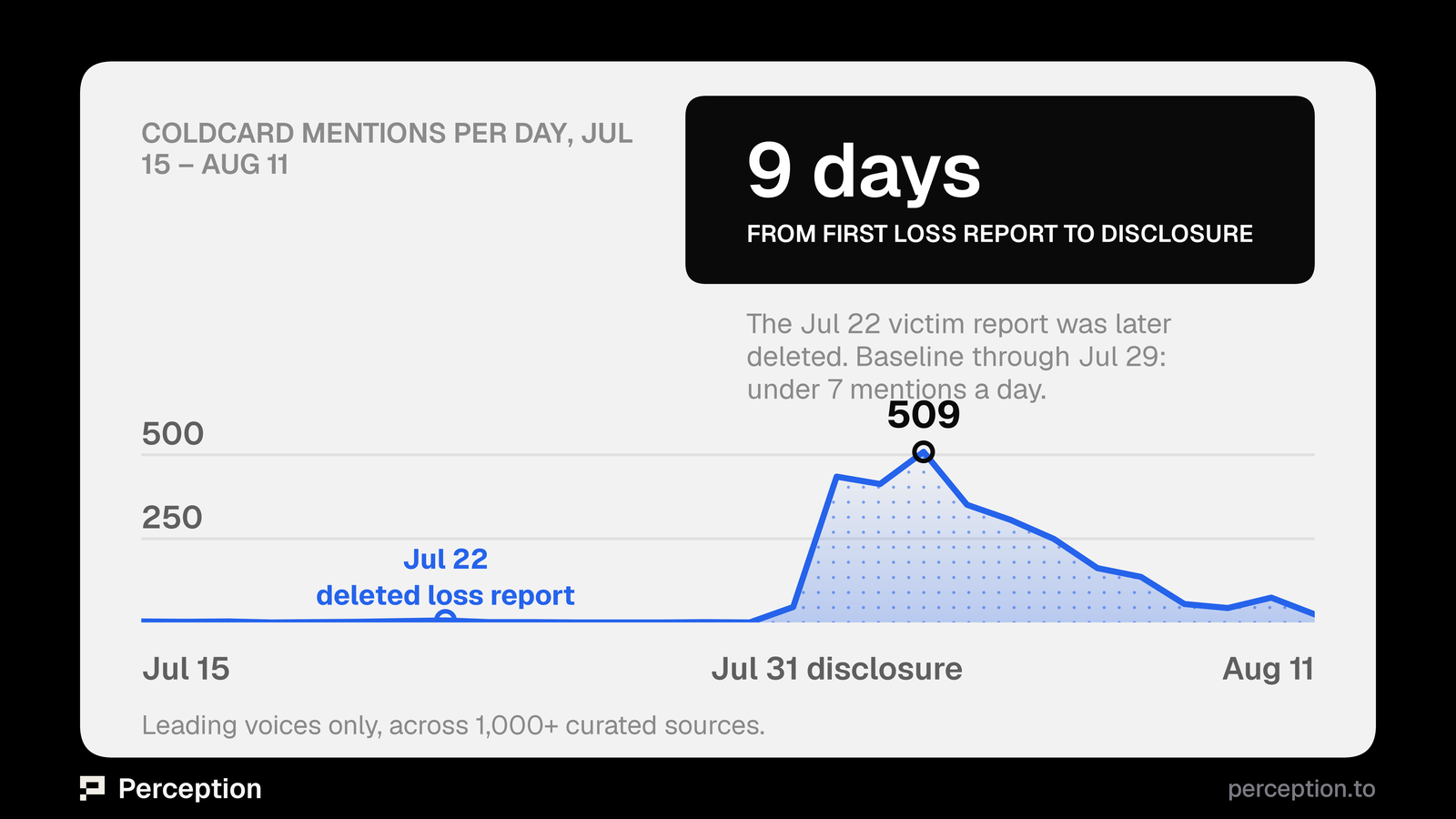
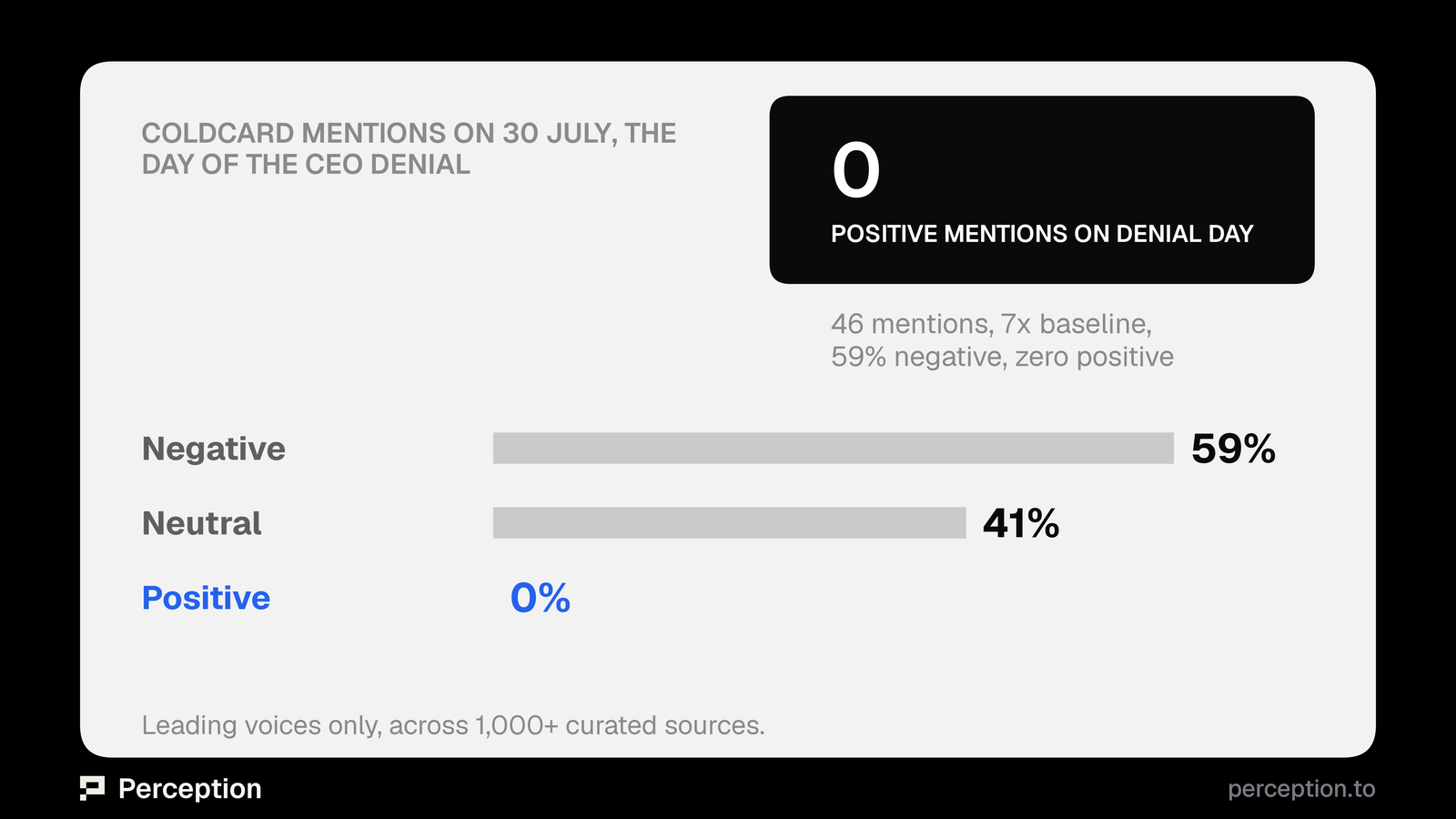
Eight days later the founder denied any wallet-wide vulnerability while 594 BTC moved.
That day the tracked discourse ran 59% negative and zero positive.
The crowd rejected a false denial in hours and slept on a true warning for nine days.
Institutional media showed up August 3, twelve days after the victim posted, one day after peak attention.
Ten mentions total.